Bean管理
Bean的作用域
Spring支持五种作用域,后三种在web环境才生效:
| 作用域 |
说明 |
| singleton |
容器内同名称的bean只有一个实例(单例)(默认) |
| prototype |
每次使用该bean时会创建新的实例(非单例/多例) |
| request |
每个请求范围内会创建新的实例(web环境中) |
| session |
每个会话范围内会创建新的实例(web环境中) |
| application |
每个应用范围内会创建新的实例(web环境中) |
 1
 2
 3
 4
 5
 6
 7
 8
 9
10
11
12
13
14
15
16
17
18
19
20
21
22
23
24
25
26
27
28
29
30
31
32
33
34
35
36
37
38
|
import org.junit.jupiter.api.Test;
import org.springframework.beans.factory.annotation.Autowired;
import org.springframework.boot.test.context.SpringBootTest;
import org.springframework.context.ApplicationContext;

/**
 * 默认bean是单例的,多次获取是同一个对象
 * 默认的单例bean是在项目启动时创建的,创建完毕后存入Spring容器中
 * 可以在bean的类名上加上@Lazy注解来延迟到第一次使用时再创建bean对象
 */
@SpringBootTest
class SpringbootWebTests {
    @Autowired
    private ApplicationContext applicationContext; // Spring容器

    @Test
    public void testScope() {
        for (int i = 0; i < 3; i++) {
            Object bean = applicationContext.getBean("deptController");
            // 验证是否为同一个对象
            System.out.println(bean);
            /**
             * 输出结果:
             * com.itheima.controller.DeptController@4e4d0a0b
             * com.itheima.controller.DeptController@4e4d0a0b
             * com.itheima.controller.DeptController@4e4d0a0b
             */
        }
    }
}


// 下方为bean
@Lazy // 延迟到第一次使用时再创建bean对象
@RestController
public class DeptController {
    ...
}
|
修改bean的作用域为prototype,验证是否每次都不同:
 1
 2
 3
 4
 5
 6
 7
 8
 9
10
11
12
13
14
15
16
17
18
19
20
21
22
23
24
25
26
27
|
@SpringBootTest
class SpringbootWebTests {
    @Autowired
    private ApplicationContext applicationContext; // Spring容器

    @Test
    public void testScope() {
        for (int i = 0; i < 3; i++) {
            Object bean = applicationContext.getBean("deptController");
            // 验证是否为同一个对象
            System.out.println(bean);
            /**
             * 输出结果:
             * com.itheima.controller.DeptController@60652518
             * com.itheima.controller.DeptController@438aaa9f
             * com.itheima.controller.DeptController@3f06ebe0
             */
        }
    }
}

// 下方为bean
@Scope("prototype") // 修改bean的作用域为多例
@RestController
public class DeptController {
    ...
}
|
应用场景
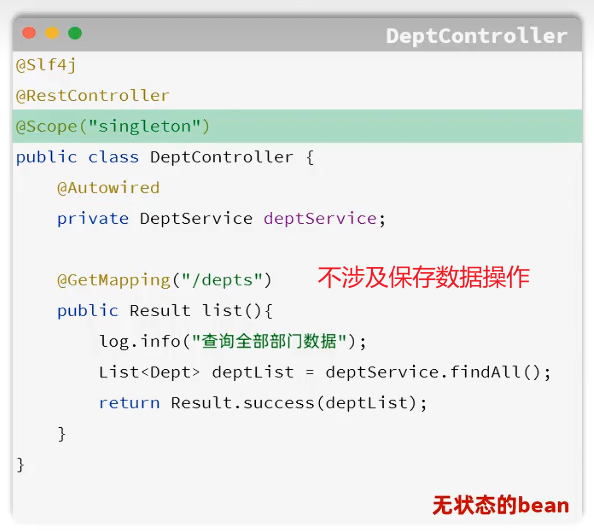
如果是无状态的bean,就可以设置为单例
无状态的bean:在该对象中不保存数据
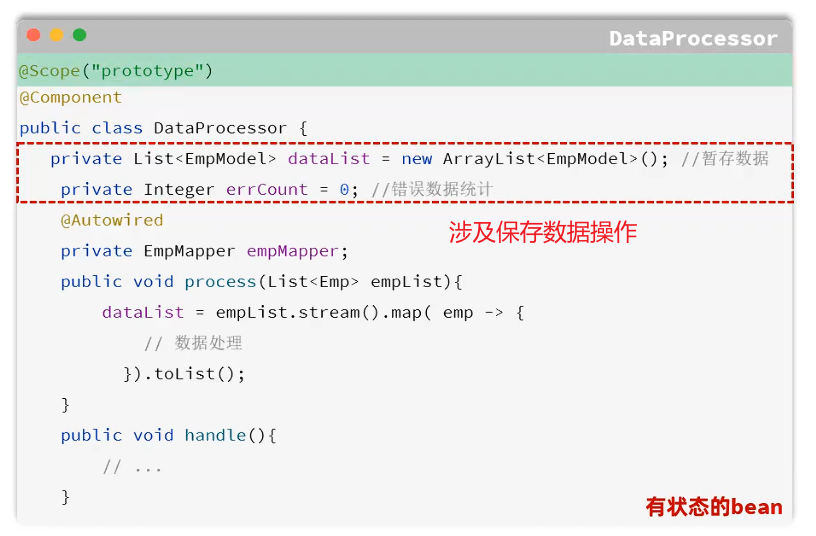
如果是有状态的bean,就可以设置为多例
有状态的bean:在该对象中会保存数据
在实际开发当中,绝大多数的Bean是单例的,不需要配置scope属性
第三方Bean
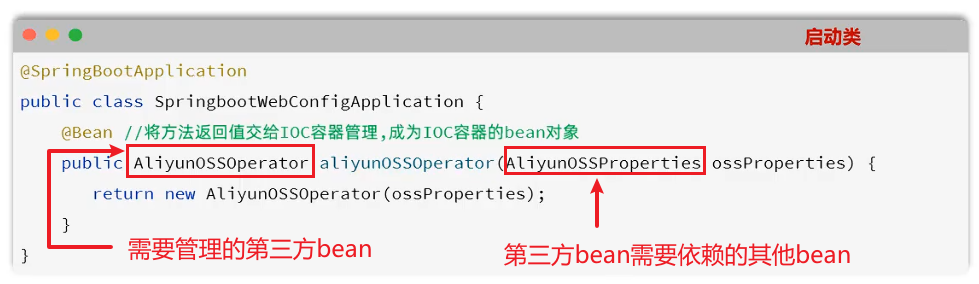
如果需要管理的bean对象来自于第三方,一般为只读的,无法编辑,也就无法使用@Component注解声明bean,此时可以使用@Bean注解
一种方法是在启动类当中进行管理,不过不推荐这种方式
还有一种推荐的方式就是用@Configuration专门声明一个配置类,进行集中管理
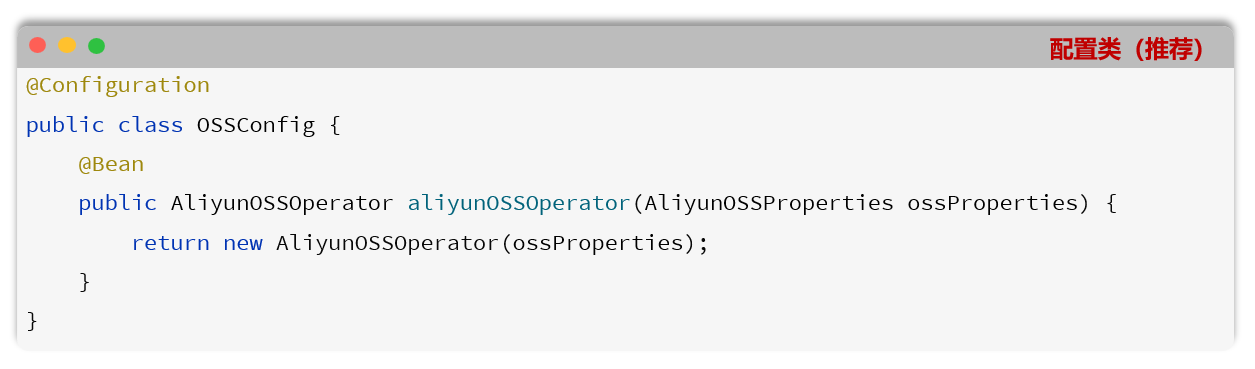
第三方bean需要依赖其他bean时,将其他bean定义在方法形参中即可,容器会根据类型自动装配
若第三方bean没有需要依赖的bean,形参部分空着即可
通过@Bean注解的name或value属性可以声明bean的名称,如果不指定,默认bean的名称就是方法名